Currently accepting a small number of private students this season, in KL and online.

Authentic meditation and pranayama.

The original meditation and breathing practices from the yoga tradition. For anxiety, sleep, stress, focus and the long, slow settling of the mind. Taught privately in Kuala Lumpur or live online.

Begin a Conversation → See the Practices
Currently accepting a small number of new students
Aman Merican teaching meditation and pranayama in Kuala Lumpur

The breath steadies first. The mind follows.

The meditation and breathing I teach are not from a podcast, an app, or a weekend workshop. They come from Raja Yoga, a four-thousand-year-old tradition kept inside one family for three generations and passed to me by my mother and her father before her.

Pranayama settles the breath. Meditation is where a settled breath leads.

Here is the order that matters, and that most people get backwards. You cannot force a restless mind to be quiet. But you can steady the breath, and a steady breath quiets the mind almost on its own. So we begin with pranayama, the regulation of the breath, and that becomes the doorway into meditation. This is the same work I do daily with students through private yoga sessions in KL.

You do not need to know Sanskrit. You do not need to believe anything. You learn a few breathing practices, well, and a few ways to rest the mind. Then you use them daily. That is the whole practice.

Three ways to rest the mind.

i.

Breath Awareness

The first meditation. Where everyone begins.

The simplest meditation in the tradition, and the one I start almost every student on. You do nothing to the breath. You only watch it. The breath becomes the single thing the attention rests on, and each time the mind wanders, you bring it back. That returning is the practice.

It sounds easy and is quietly profound. Within a few weeks of daily practice, the mind learns to settle on command. This is the bridge from pranayama into deeper meditation, and the foundation everything else is built on.

ii.

Trataka, Steady Gazing

For concentration and a still mind.

A classical practice of resting the gaze on a single point, often a candle flame, then closing the eyes and holding the image within. It gathers a scattered mind quickly, which is why it has survived thousands of years.

Particularly useful for people whose thoughts race, who struggle to switch off in the evening, or who find seated meditation difficult at first. The eyes give the restless mind something to hold while it learns to be still.

iii.

Inner Silence

Antar Mouna. The deeper rest.

A step-by-step practice of withdrawing attention inward, letting thoughts rise and pass without chasing them, until the mind grows quiet on its own. This is meditation in its fuller sense, and where the lasting changes happen.

This is the work that empties years of accumulated mental tension. It is not forced and not strained. You learn to sit with the mind as it is, and watch it settle. Most students reach this gradually, once the breath and the attention have been trained first.

Four breathing practices that open the door.

i.

Long, Slow Belly Breath

The foundation. Five minutes daily.

The simplest and most overlooked practice in all of yoga. A slow, full breath into the belly, with the exhale longer than the inhale. Done daily, it teaches the nervous system that there is no danger here, and the body can rest.

This single technique, practised twice a day for two weeks, lowers resting heart rate, deepens sleep and reduces anxiety in nearly every student who tries it. It is also the breath that makes sitting in meditation possible.

ii.

Alternate Nostril Breathing

Nadi Shodhana. Five to ten minutes daily.

One of the oldest practices in the tradition. Breathe in through one nostril, out through the other. Switch. Repeat. The technique balances the two sides of the nervous system, the active and the resting, in a way I have not seen any other intervention match.

Particularly effective for anxiety, racing thoughts and the low-grade overstimulation most modern adults live with. It is the classical preparation for meditation, used for exactly this purpose for thousands of years.

iii.

Long Exhale Breath

For sleep. Practised in bed, in the dark.

The simplest of all the practices, and the most useful at the end of a long day. Breathe in for a count of four. Breathe out for a count of eight. Repeat.

The long, slow exhale is the body's own most reliable signal to enter rest. Most students do not make it to ten breaths before falling asleep. If you wake in the night, this is the practice to return to. Do not check the time. Stay in the dark and return to the breath.

iv.

Ujjayi Breath

The ocean breath. For focus and steady attention.

A slightly constricted breath through the nose, producing a soft oceanic sound at the back of the throat. The technique deepens the breath, lengthens the practice, and brings the mind into focused attention, which is exactly the state meditation needs.

Particularly suited to executives, founders and professionals who need to anchor focus during high-stakes work. Three minutes of Ujjayi before a difficult meeting can change the quality of decision-making more than any cup of coffee will.
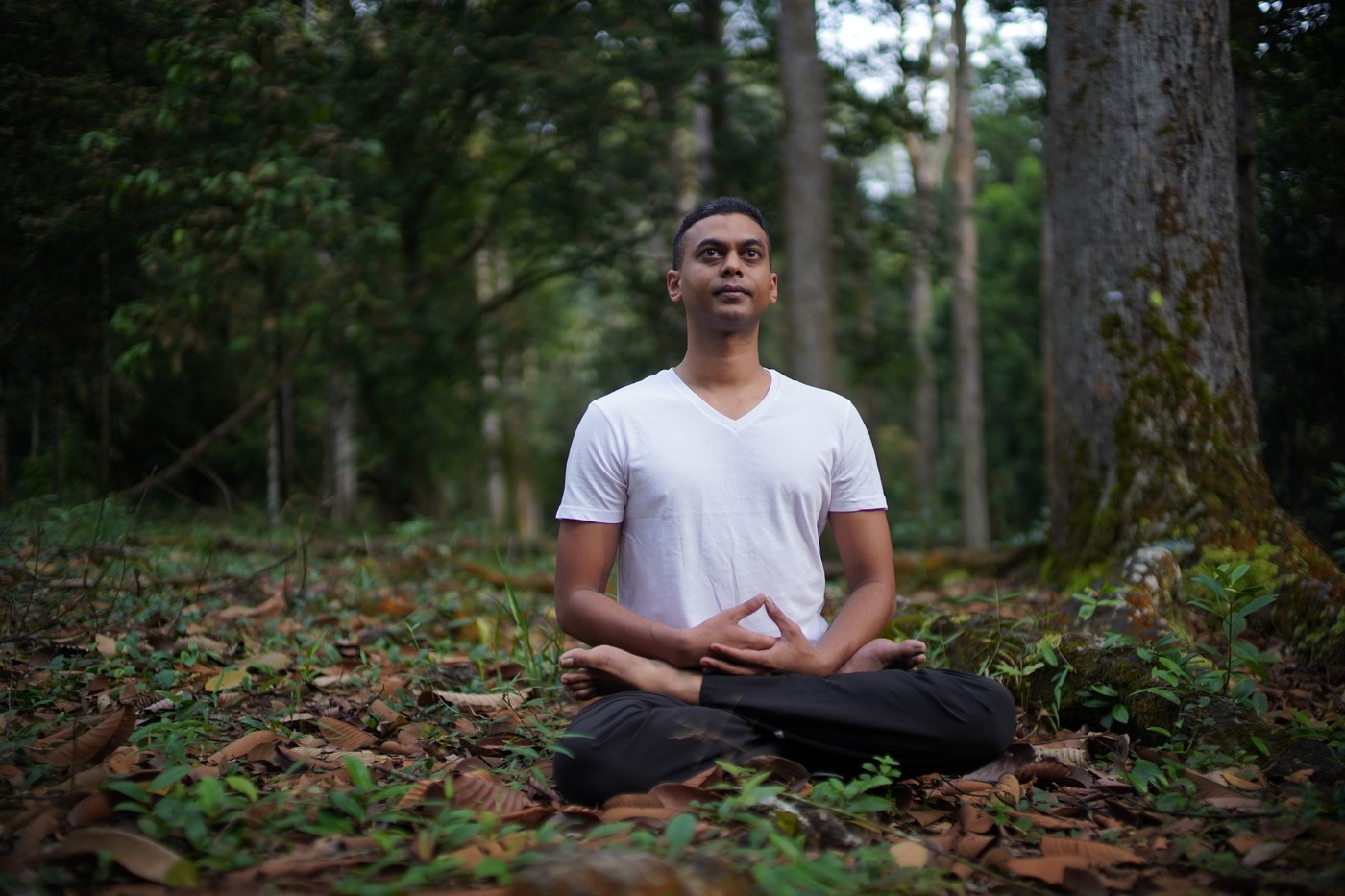
Meditation is the entry point to almost everything.

For Anxiety

Anxiety is breath gone wrong and a mind that will not slow. We steady the breath first, then teach the mind to rest. The body cannot remain in alarm when the breath is steady and the attention is settled. Combined with yoga therapy, this is one of the most effective approaches I know.

For Sleep

The right breath practice before bed settles the body into rest gently and naturally. A quiet meditation settles the racing evening mind. Falling asleep gets easier first. Staying asleep follows.

For Chronic Stress

Years of unconscious stress accumulate in the nervous system. The breath empties the load from the body. Meditation empties it from the mind. Most students feel lighter within two weeks of daily practice.

For Focus & Clarity

A trained, settled mind is the secret weapon of every calm leader I have taught. Focus deepens. Decisions get clearer. The afternoon energy crash flattens out. Sleep improves, and with it, everything else.

Two ways to begin.

Kuala Lumpur · At Your Home

Private in KL & PJ

I come to your home for private sessions across Kuala Lumpur and PJ, including Bangsar, Mont Kiara, KLCC or Damansara Heights. We work through the breath and meditation practices in proper sequence. Most students learn the core practices within four sessions, then practise daily on their own.

From RM 600 for four sessions
Explore Private KL Classes →
Worldwide · Live via Zoom

Online Meditation & Pranayama

Meditation and breath work translate perfectly to video. You do not need a mat. You do not need much space. A laptop, a quiet room, and a chair are enough. Suited to students outside KL or anyone preferring to practise from home.

From USD 50 for a group pack
Explore Online Classes →

Before you begin.

What is the difference between meditation and pranayama?

Pranayama is the practice of regulating the breath. Meditation is the practice of resting the mind. In the classical yoga tradition they are two steps of the same path. The breath is steadied first, because a settled breath makes a settled mind possible. Pranayama prepares the ground. Meditation is what grows there. Most people find meditation far easier once the breath has been trained first.

How quickly does meditation help with anxiety?

Some people feel a noticeable shift within a single session, especially when meditation is paired with breath work. Most students notice consistent calm within two weeks of daily practice, ten to fifteen minutes a day. The breath is the most direct way to influence the nervous system, and meditation is how the calm becomes lasting.

Is this meditation religious?

No. The meditation I teach comes from the yoga tradition, but it asks you to believe nothing. You do not need to chant, join anything, or adopt any belief. These are practical techniques for steadying attention and calming the nervous system. People of every faith and none practise them safely and comfortably.

Do I need to do yoga to learn meditation or pranayama?

No. Meditation and pranayama can be taught and practised entirely on their own. Many of my students come for these practices specifically, without ever doing a yoga posture. The breath is the doorway. Meditation is where it leads. The postures are optional.

How long should I practise each day?

Ten to fifteen minutes is enough to begin. Most experienced students settle into twenty minutes a day, split between morning and evening. Consistency matters far more than duration.

Can I learn meditation and pranayama over Zoom?

Yes. These are among the few practices that translate fully to video. The teaching is mostly verbal, the practice is mostly internal, and the technique is fundamentally the same on screen as in person.

The breath is the doorway. It always has been.

If you have read this far, something in you is already ready. Send a message and we will arrange a quiet conversation about where to begin.

Begin a Conversation →