This is the question I am asked the most. It usually comes in the first conversation, and there is always a quiet hope behind it. The person asking is tired. They have been carrying stress for years. They want to know how long before they will feel different.
I will give you the honest answer in this article. I will tell you what changes first, what takes longer, and what most people get wrong about the timeline. I will also tell you what I see in my private yoga classes in Kuala Lumpur after twenty years of teaching, because that is more useful than a generic answer.
The first thing to understand about stress
Stress is not a feeling. It is a physiological state. The body has been activated by something, real or imagined, and the nervous system stays switched on. Modern life keeps it switched on almost permanently. Phones, emails, traffic, work pressure, financial worry, news headlines. The body never gets the signal that the danger has passed.
The result is what we now call chronic stress. The breath becomes shallow. The shoulders rise. The jaw tightens. Sleep becomes lighter. Digestion slows. The immune system weakens. The mind becomes reactive and tired at the same time.
Most people in Kuala Lumpur today are walking around in this state without realising it. They call it normal. It is not normal. It is the cost of modern living, and the body is keeping a record of every hour of it.
The Yogis understood this thousands of years ago. They had a word for the disorders that come from a disturbed mind affecting the body. They called it Aadhi. The classical texts go into great detail on how to treat it. Almost everything they prescribed was breath work.
What happens in your first session
In the first session, the engine of the work is the breath. Some posture, yes. A long relaxation at the end, definitely. But the main work is to slow the breath, particularly to lengthen the exhale.
When the exhale becomes longer than the inhale, a signal travels through the vagus nerve to the brain. The signal is simple. It tells the body that the danger has passed and the system can rest.
For someone who has been chronically stressed for years, this is often the first time in a long time that the signal has been sent. The response is often immediate. Shoulders drop. The breath deepens on its own. The jaw releases. Most students leave their first session feeling more relaxed than they have been in months.
This is not yet healing. It is the body remembering what calm feels like. That memory matters. It becomes the reference point for everything that follows.
Week one and week two
If you continue, even just three or four sessions a week, the first real change usually appears in your sleep. This is one of the most consistent patterns I see across my students.
Falling asleep gets easier first. The mind no longer chases the day into the night. By the second week, many students notice they are sleeping more deeply, and a few notice they have stopped waking at 3 AM the way they used to.
Why does sleep change first? Because sleep is the system most affected by chronic stress. The same nervous system that runs your stress response also runs your sleep cycle. When you start to regulate one, the other follows.
This is the same principle the Gheranda Samhita describes when it talks about the breath being the link between the body and the mind. Slow the breath, and both ends of that bridge begin to settle.
Week three and week four
By the third or fourth week, the change starts to appear in the day, not just at night.
The first signs are usually small. An afternoon when you do not feel the usual energy crash. A meeting that would normally have raised your blood pressure, and you notice you are still breathing evenly through it. A drive home in KL traffic that does not require half an hour to decompress from.
None of this is dramatic. Most students would not call it a transformation. They would say the day feels less heavy. Less compressed. Less effortful. That is the actual experience of chronic stress beginning to release. It is not a fanfare. It is an absence.
Around this time, you also start to notice the breath becoming an anchor available outside the practice. You feel agitation rising in a meeting, and the breath reminds you to slow down. You sit in traffic, and you naturally take a longer exhale. The practice begins to live in you, not just on the mat.
Why most people underestimate the timeline
The most common mistake I see in new students is impatience. They want the change to come in the first week. When it does not arrive as quickly as they hoped, they wonder if they are doing something wrong.
They are not. The body is the most patient organ we own. It accumulated this stress over years. It will not unwind in a weekend.
The students who get the best results from this practice share one quality. They show up. Not heroically. Not intensely. Just regularly. Five minutes of breath work in the morning. A session two or three times a week. They do not push. They let the practice do its work on its own schedule.
Yoga is not something you complete. It is something you keep returning to. The returning is the practice.
What this looks like after six months
For students who stay with the practice for six months, here is what tends to be true.
- Sleep is reliably better. Many have stopped using the supplements or medications they previously needed.
- The breath has become an anchor available throughout the day, not just on the mat.
- Reactivity to ordinary stressors has dropped. The same situations feel smaller.
- The afternoon energy slump is softer or gone. Many students no longer need a third coffee.
- The body holds less tension. The shoulders sit lower. The jaw is looser. Chronic neck and back pain often eases substantially.
- There is a baseline calm that was not there at the start. It is not euphoria. It is something steadier.
This is not a marketing claim. This is the consistent pattern I have seen across hundreds of students over twenty years of teaching.
How to start, if you are reading this
Three suggestions if you are carrying chronic stress and considering yoga.
First, do not begin with a studio class. A noisy room, twenty other students, a generalised sequence, and a pace dictated by the average body in the room will not give you what you need. Yoga therapy in a private setting in Kuala Lumpur is what actually works for chronic stress, because the practice is shaped to your body and your nervous system on the day you arrive.
Second, give it time. Commit to four to six weeks of consistent practice before deciding whether it is working. The first session will tell you something. The first month will tell you a great deal more.
Third, keep doing the other things that help. Yoga complements therapy, exercise, sleep, time with family, and medical care. It does not replace them. The students who do best treat this practice as one strand inside a wider commitment to their own wellbeing.
The body will do the work. It has been waiting for an invitation. Send me a message when you are ready.
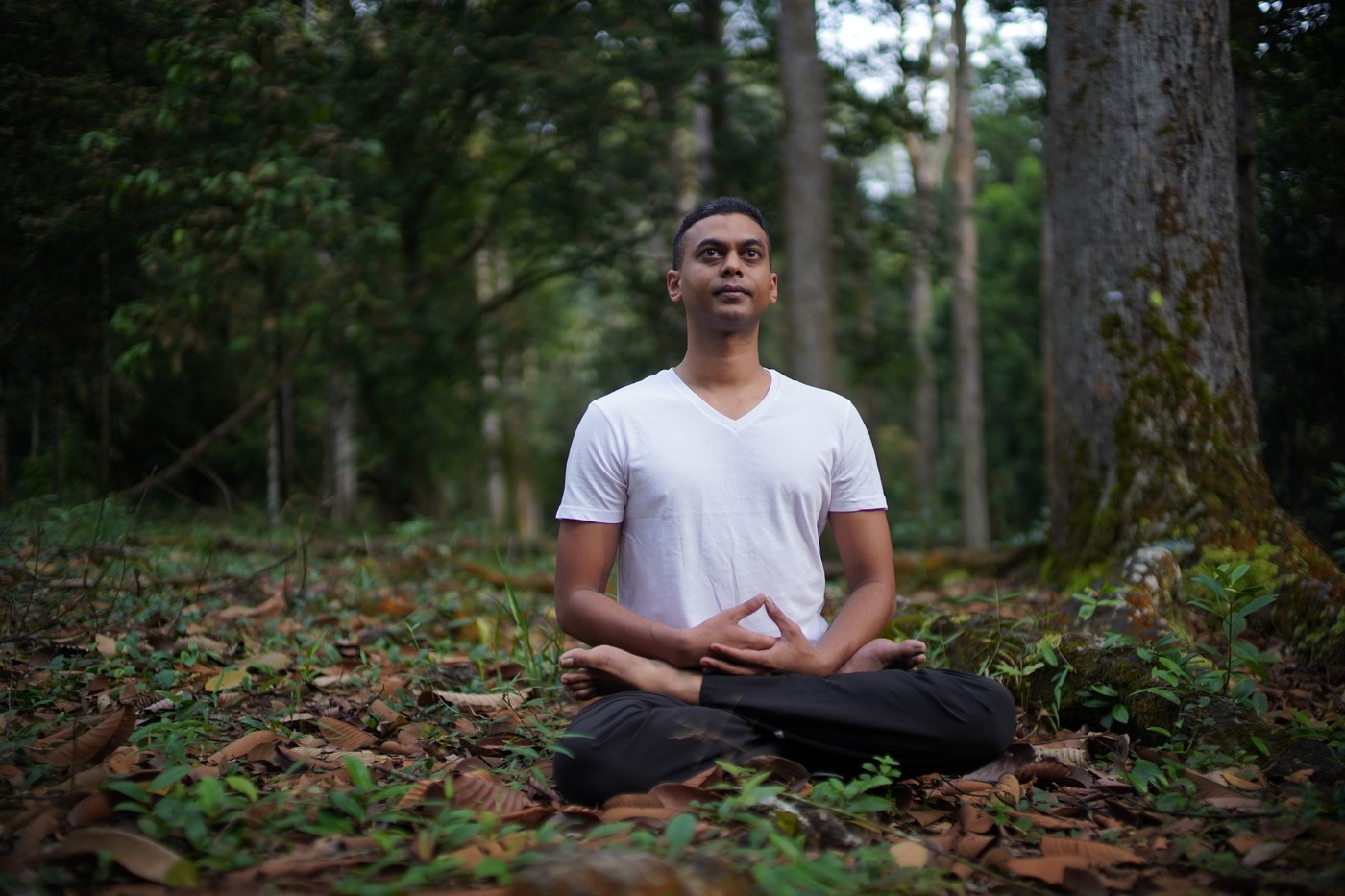
Aman Merican
Private yoga teacher in Kuala Lumpur. A third generation teacher, teaching one to one since 2007, with over 500 students taught. Read his story.