Anxiety does not begin in the mind. It begins in the body. The racing heart, the shallow chest, the tight throat. The mind only catches up afterward and gives the feeling a name. This matters, because it means the fastest way out is not through thinking. It is through the breath.
I have taught yoga for over twenty years, and I learned my breathing from my grandfather, Professor Yogacharya H. A. Rao, who spent his life studying how breath moves through the body. He never used the words you will read below. He did not need to. He worked with prana, the life force, and the channels it travels through. Modern science has since given us another language for the same thing. That language is the vagus nerve. This is the heart of any honest yoga for anxiety relief.
What follows is a fifteen minute sequence. You can do it before a meeting. You can do it at midnight when sleep will not come. You can do it on the floor beside your bed. It asks for nothing but your breath and a little quiet.
What the vagus nerve actually is
Your nervous system has two settings. One speeds you up. One slows you down. The first is the sympathetic state, the old fight or flight response. The second is the parasympathetic state, the rest and repair response. Anxiety is the body stuck in the first setting when there is no tiger in the room.
The vagus nerve is the main cable of the second setting. It runs from the brainstem down through the throat, the lungs, the heart, and into the gut. It is the body's brake. When it is active, the heart slows, the breath softens, the mind clears. Doctors measure its strength through something called heart rate variability, and higher vagal tone is linked with calmer mood and better emotional control. This is why the practice is sometimes called vagus nerve yoga. You are not stretching a muscle. You are toning a nerve.
Here is the part that changes everything. You cannot reach the vagus nerve with willpower. You cannot think your way calm. But you can reach it directly through the breath, because the nerve and the lungs are wired together.
Why the exhale is the doorway
Watch your pulse while you breathe slowly. It quickens a little as you breathe in. It settles as you breathe out. This is not random. Researchers describe it plainly. During the in breath the vagal signal is held back and the heart speeds up. During the out breath the vagal signal is restored and the heart slows down. The exhale is the brake pedal.
So the secret of every calming breath is the same. Make the exhale long. Reviews of the evidence find that slow, voluntary breathing reliably raises vagal activity. The studies point to a sweet spot of around six breaths a minute. That is one full breath every ten seconds. It feels almost too slow at first. That slowness is the medicine.
I was taught this long before I ever saw the research. The out breath should always be longer than the in breath. The science simply agrees.
The breath is the only system in the body that is both automatic and voluntary. That is what makes it the doorway.
The breath that reaches the brain
There is one idea at the centre of this sequence that I have never found in any modern article.
The lungs, like the brain, have lobes. A lower, a middle, and an upper. In ordinary shallow breathing the air mostly fills the middle. The upper lobes stay closed for years. When you breathe into the upper lobes on purpose, the prana is carried up into the neck, the head, and the brain. This is the breath I was taught to use for anxiety, for restless thinking, for the disorders of the mind.
I cannot prove prana in a laboratory. But there is something striking here. Research has found that nasal breathing shapes the electrical rhythms of the limbic brain, the seat of emotion and memory, in a way that breathing through the mouth does not. The breath that goes up through the nose really does reach the parts of the brain where fear lives. The old teaching pointed there. The scanner found it later.
That is the spirit of this sequence. Old knowledge and new evidence walking the same path. It is the same work I teach in my private breathwork classes in KL.
The 15-minute sequence
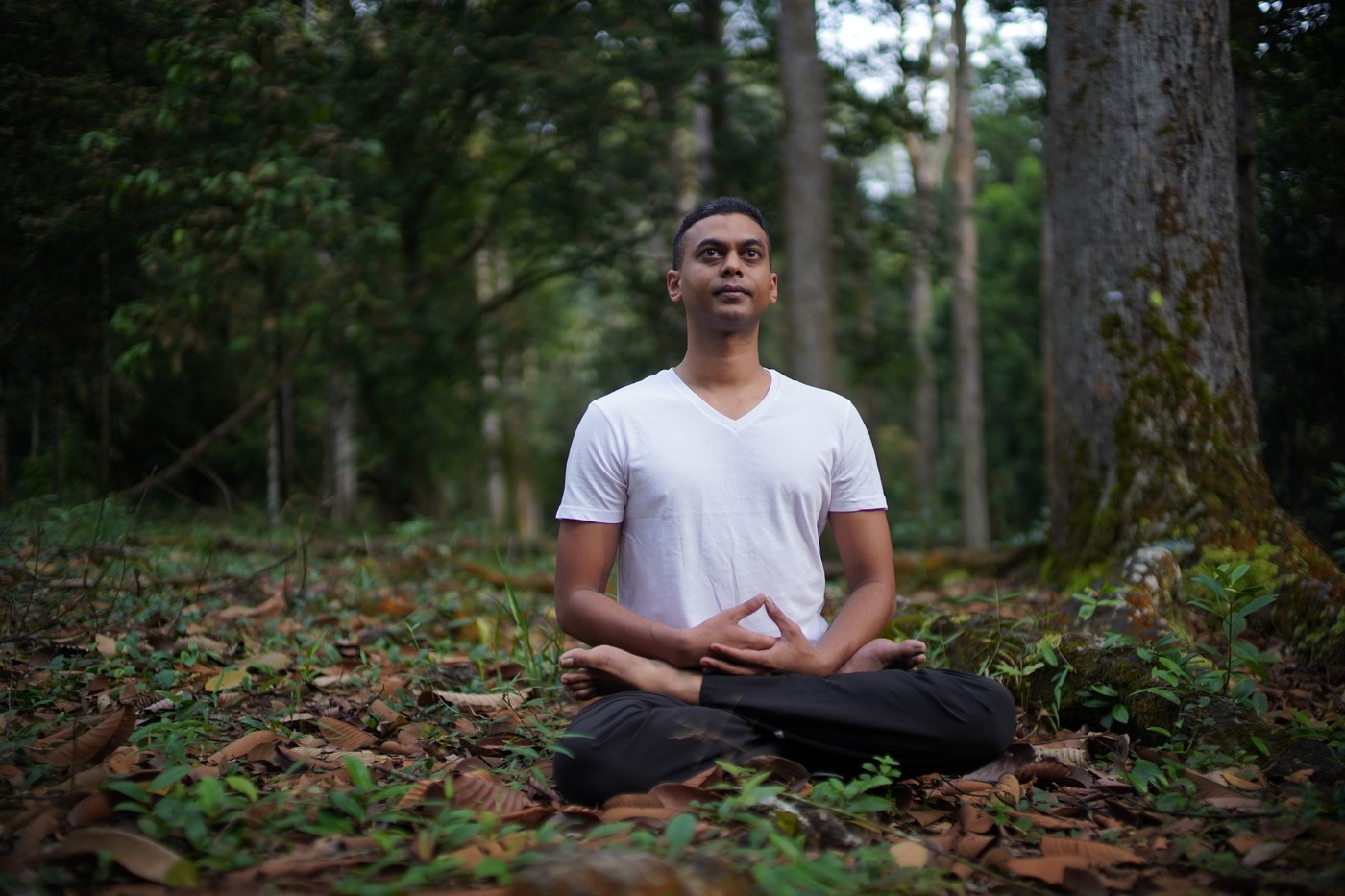
Sit on the floor or on a cushion. Kneel in Vajrasana if it is comfortable, or simply cross your legs. Keep the spine tall and the shoulders soft. Breathe only through the nose for all of it. Set a gentle timer if you wish, but do not watch it.
Minutes 0 to 1. Settle
Close your eyes. Do nothing to your breath yet. Just feel it. Let the body arrive. Let the floor hold you. Notice the breath getting a little slower on its own.
Minutes 1 to 4. Nasal Cleansing
This is the cleansing breath. It clears the nasal passages and the sinuses, and it evens out the flow of breath between the two nostrils. We do not breathe equally through both sides. The dominant nostril changes every few hours through the day. The right nostril carries the positive force, the Pingala, into the right side of the nervous system. The left carries the negative force, the Ida nadi, into the left. This breath brings the two back into balance.
- Place your right thumb against your right nostril and close it. Raise your left hand, elbow a little above the shoulder, palm facing up.
- Breathe in and out vigorously through the left nostril. You should hear a soft snorting sound. Do this for about twenty to thirty seconds. That is one round. Complete three rounds on the left.
- Then switch. Close the left nostril with your left thumb, raise the right hand the same way, and do three rounds through the right.
- To finish, raise both hands with the palms facing up and breathe in and out vigorously through both nostrils, the same snorting breath, for three more rounds.
Keep the face soft and stop if you feel lightheaded. By the end the passages are clear, the head feels open, and the tightness around the neck and the brow has begun to let go.
Minutes 4 to 6. Bhastrika, the bellows breath
Now we take the clearing deeper into the lungs. Bhastrika is fast and strong. It wakes the lungs and floods the blood with oxygen.
- Take a few normal breaths first. Then breathe in and out through the nose quickly and evenly, pumping from the belly, about one breath per second. Keep the face relaxed. Do twenty pumps.
- Then stop. Take one slow, full breath in, and let it go even slower.
Here is what most people miss. The calm is not in the pumping. The calm is in the silence right after. When you stop, the body swings back hard into the parasympathetic state. Sit in that stillness for a few breaths and feel it arrive. Repeat the round once or twice.
Minutes 6 to 11. Upper Lobe Breathing
This is the centre of the whole practice. We send the breath, and the prana, up into the head.
- Sit tall. Take the in breath slowly and feel it rise high into the chest, all the way up to the collarbones. You will feel the very top of the lungs fill, a place ordinary breathing never reaches.
- Then release the breath slowly and completely. Long and unhurried. Keep that one rule alive. The exhale is always longer than the inhale.
- Aim for about six breaths a minute. One breath every ten seconds.
As you do this, picture the breath travelling up through the throat and into the head. This is where the breath clears the mind, lifts dullness, and quiets anxious thought. The nose itself helps you here. The lining of the sinuses releases nitric oxide, which widens the blood vessels and carries fresh oxygen upward. Breathe here for five full minutes. By the end the head feels light and clear. The chatter has usually gone quiet on its own.
Minutes 11 to 15. Stillness
Let the hands rest in the lap, palms turned up. Stop directing the breath. Let it become small and natural. Bring your attention to the soft point where the two nostrils meet, just at the base of the nose, and rest your awareness there. Do nothing else.
This is the deepest part. With the breath this slow and the attention this gathered, the body drops fully into rest. The breath grows so quiet you can barely feel it. The mind grows quiet with it. Stay for four minutes. Then open your eyes slowly and sit for a moment before you stand.
A few honest notes
Do this once and you will feel calmer. Do it daily and you change the baseline. Vagal tone is like a muscle. It grows with use, and a stronger brake means anxiety has less power over you on the hard days.
Morning is good. The hour before sleep is better. And the real test is the difficult moment itself. The next time the heart starts to race, you do not need the full fifteen minutes. You need only one thing you have practiced here. Breathe in slowly. Breathe out even slower. The body remembers the rest.
If anxiety is something you live with day to day, this kind of breathwork sits well alongside the wider yoga therapy work I do for stress and the nervous system. And if the difficulty is severe or longstanding, please also speak to your doctor. Breath is a powerful ally, but it works best as one strand inside a fuller response.
Aman Merican
Private yoga teacher in Kuala Lumpur. A third generation teacher, teaching one to one since 2007, with over 500 students taught. Read his story.