Are you tired of being tired? Not the kind of tired that a coffee fixes. The kind that lives in your bones. The kind where you wake up after eight hours of sleep and still feel like you have not rested at all. The kind where your body is exhausted but your mind simply will not stop.
If that sounds familiar, I want to introduce you to something that requires zero effort, zero flexibility, and zero equipment, and yet might be the most powerful recovery tool you have never tried.
It is called Yoga Nidra. And no, you do not have to move a muscle.
What Yoga Nidra is (the effortless practice)
Let me start with what Yoga Nidra actually is, because most people get this wrong.
The word yoga points to inner union, and nidra means sleep. So at its most literal, Yoga Nidra translates to yogic sleep. But that undersells it. A better way to describe it is sleep carrying a thread of awareness, a state that sits in the gap between being awake and being asleep.
Here is what makes it extraordinary. You are conscious, but your body and intellectual mind are in deep relaxation. You have not lost yourself in sleep, but you have gone somewhere most people never reach in ordinary sleep.
The practice is almost insultingly simple in its setup. You lie flat on your back in Savasana, the corpse pose, whether on a blanket, on your bed, or on the floor. Your eyes are closed. Your arms rest beside you, palms facing upward. You do not move. You do not concentrate. You do not analyse or try to remember anything. You simply listen to a guiding voice and let your awareness travel where it is directed.
That is it. No downward dogs. No sun salutations. No flexibility required. If you can lie down and listen, you can do this.
The science: how Yoga Nidra helps with burnout
Here is what is actually happening when you burn out, and why Yoga Nidra helps.
Burnout is not laziness. It is a physiological state. When you are chronically stressed, whether from work, relationships, or just the relentless pace of modern life, your nervous system gets stuck in a sympathetic state. That is the fight or flight mode. Your cortisol stays elevated, your muscles stay tensed, your mind stays hypervigilant. Even when nothing is actively threatening you.
The cruel irony of burnout is that ordinary sleep does not fully reset this. When you are wound this tight, you drag the day's frustrations and unfinished arguments into bed with you. Your sleep stays shallow because part of you never actually clocks off. You wake up still hauling the same weight you lay down with.
Yoga Nidra bypasses this problem by doing something ordinary sleep cannot. It creates a temporary dissociation between mind and body in a conscious state. Your awareness remains present, but your nervous system receives all the signals of deep rest. The parasympathetic system, the rest and digest mode, activates fully.
This is also where the brainwave science gets interesting. In your normal waking state, your brain operates in beta waves that are fast, active, and analytical. As you move into Yoga Nidra, your brain shifts into alpha waves, a relaxed awareness, and then into theta waves, the hypnagogic state just before sleep. This theta state is where the body rests most deeply. It is where the subconscious mind becomes accessible, pliable, and receptive. It is where the real unburdening takes place.
The practice also works through three distinct layers of tension that pile up in modern life:
- Muscular tension. The physical tightness your body stores without you noticing.
- Emotional tension. The tangle of opposing feelings, love and resentment, comfort and pain, that is the hardest to let go of, and that quietly destabilises us when we bottle it up.
- Mental tension. The endless churn of worry, second-guessing, and racing thoughts that leaves you irritable and drained.
When all three layers release together, something shifts. The nervous system does not just rest. It begins to repair.
The nervous system does not heal through effort. It heals through the absence of effort.
Core benefits for mental health
It reduces cortisol rapidly
Sustained high cortisol is one of the primary physiological markers of burnout. The deep parasympathetic activation that Yoga Nidra triggers works directly against this. Within a single session, the body moves out of the stress response. Practised regularly, this resets the baseline, and your nervous system stops defaulting to high alert.
It transforms sleep quality
This is one of the more underappreciated benefits. Think of Yoga Nidra as a drug-free way to settle a restless mind at night, but it works on a deeper level than a sedative or a list of sleep-hygiene tips. It retrains the patterns running underneath your conscious mind so that slipping into genuinely deep sleep becomes natural again. You are not just muting the symptom. You are repairing the mechanism. If broken sleep is your main struggle, you may also find my three breath practices for insomnia useful alongside this.
It recharges energy without adding to your load
This is the one that convinced me personally. On days when I am too depleted to exercise, too scattered to meditate, too overwhelmed to journal, Yoga Nidra asks nothing of me. I just lie there. And somehow, twenty minutes later, I feel like I have slept for two hours. The physical, pranic, and mental levels of the body are directly recharged. You come back to your day with bandwidth you did not have before.
It clears out old mental grooves
This might sound a little mystical, but stay with me. We all carry deep mental imprints, things like old habits, conditioned reactions, and emotional residue, all buried below conscious awareness. They are the reason we keep falling into the same patterns and the same draining loops without quite knowing why. Yoga Nidra gradually brings these imprints up and lets them dissolve. So it is not only relaxing you in the moment. Over time it is quietly reshaping how you respond to your own life.
How to start a practice at home
The most important thing I can tell you here is to keep the barrier to entry at zero. You do not need a studio. You do not need a teacher in the room. You do not need any prior experience with yoga or meditation. The only thing you need is a quiet space, twenty minutes, and a guided audio track.
Here is a simple checklist to set yourself up properly:
- Find a quiet room where you will not be interrupted. Semi-darkness works best, not pitch black and not brightly lit.
- Lie on a blanket or mat in Savasana. Flat on your back, arms slightly away from the body, palms upward, legs slightly apart.
- Wear loose, comfortable clothing. Your body temperature will drop as you relax, so have a light blanket ready to cover yourself.
- Remove your watch, glasses, and any jewellery. Anything that creates even subtle physical awareness can pull you out.
- Use headphones if possible. The quality of the guiding voice is important. It is your only anchor to awareness during the practice.
- Start with ten to twenty minutes. You do not need a long session to feel the effects.
There is one instruction worth fixing in your mind before you start. Do not concentrate, and do not fall asleep. Those are the two ways the practice slips away from you. Trying to concentrate creates tension, which is the opposite of the point. And drifting off, while harmless, means you miss the conscious layer that makes this more than a nap. Just stay aware. Follow the voice. Let everything else go.
If you feel yourself drifting into sleep, that is okay at first, especially if you are severely sleep-deprived. The practice will still do its work. But over time, aim to hold that thread of awareness all the way through.
The deeper promise
Here is what I have come to understand about burnout recovery, and why I think Yoga Nidra deserves far more attention than it gets in wellness conversations.
We have been sold the idea that recovery means doing something, like a cold plunge, a workout, or a new supplement. But the nervous system does not heal through effort. It heals through the absence of effort. Through genuine, deep, conscious rest.
Yoga Nidra is the science of that rest. Not the kind where you are lying on your phone. Not the kind where you are relaxing but your mind is still spinning. True rest, the kind where the subconscious opens, old tensions dissolve, and something in you quietly rebuilds.
Twenty minutes. Lying down. Just listening. That is the whole practice. And it might be exactly what your exhausted nervous system has been waiting for. If burnout is where you find yourself right now, this practice also sits at the centre of the yoga therapy work I do for stress and exhaustion.
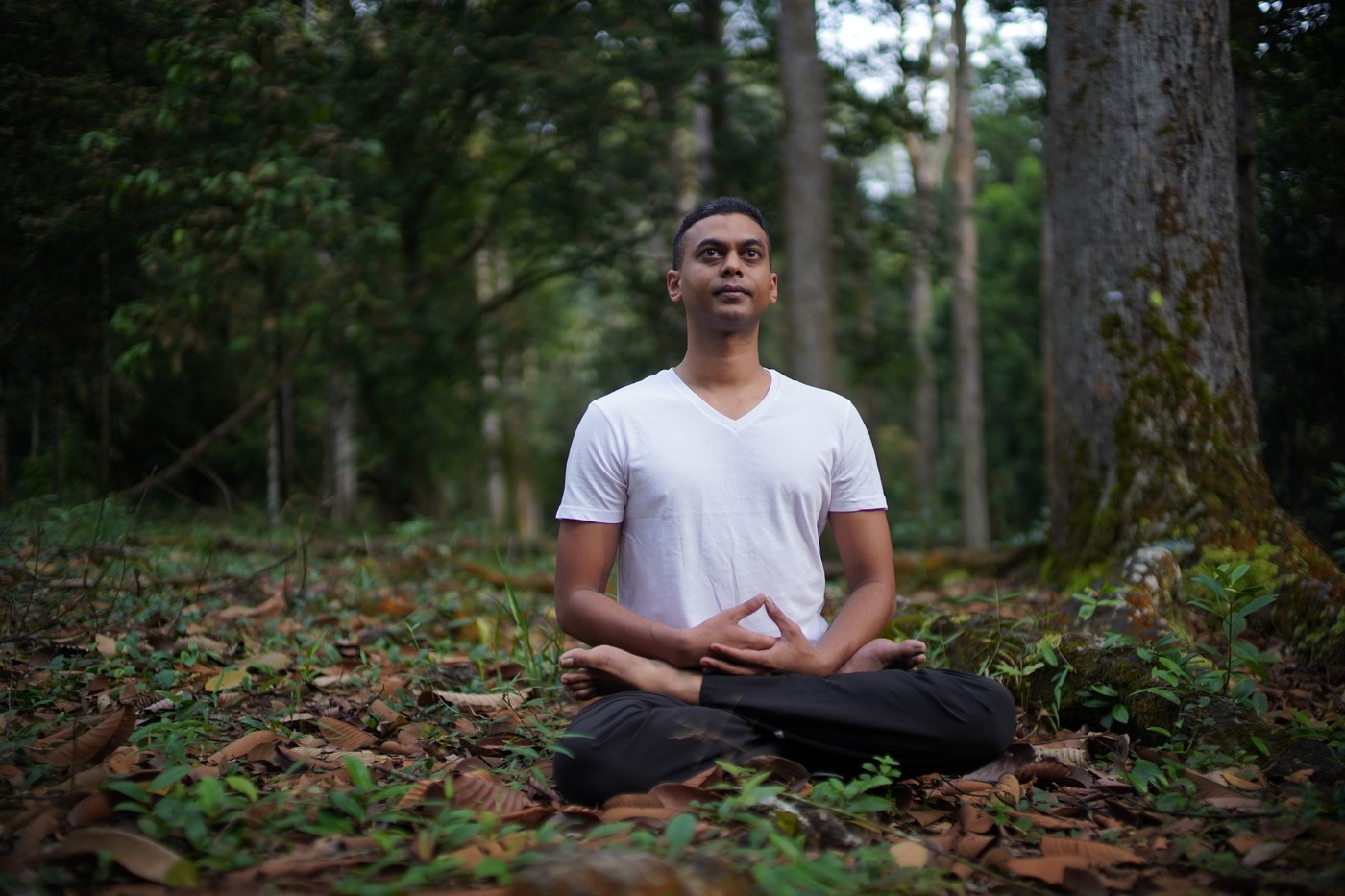
Aman Merican
Private yoga teacher in Kuala Lumpur. A third generation teacher, teaching one to one since 2007, with over 500 students taught. Read his story.